
Screening for Musculoskeletal Injury (#1 Defense HealthCare Burden)
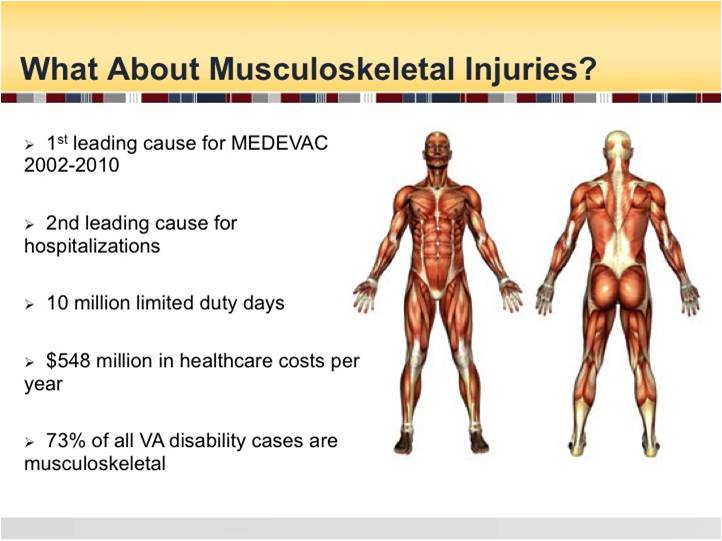
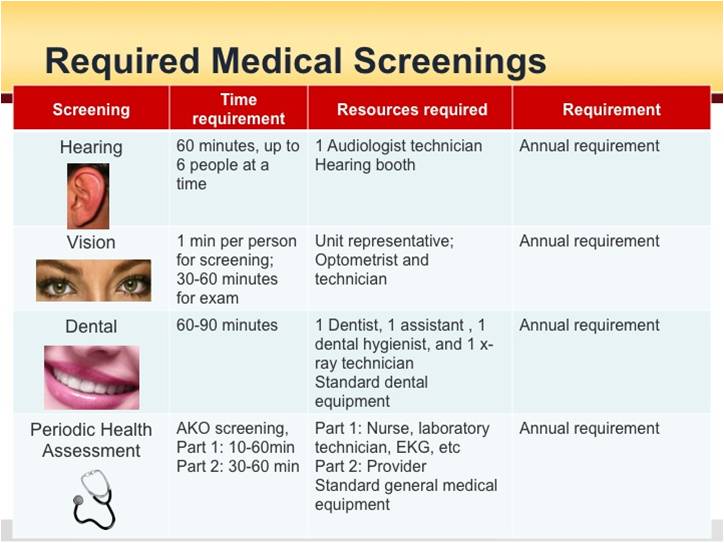
It is an annual requirement to screen every Service member for hearing, vision, dental, and overall health wellness. We also routinely screen for other medical conditions (HIV) and mental health. However, we don’t screen for musculoskeletal injuries, which are the primary source of disability in the U.S. Military. They affect over 900,000 service members annually; resulting in over 25 million limited-duty days. In 2007 alone they were responsible for approximately 2.4 million medical visits to military treatment facilities and accounted for $548 million dollars in direct patient care costs. These injuries decimate our units at a much faster pace than any combat-related injuries, and the associated disability long carries over into retirement and separation.
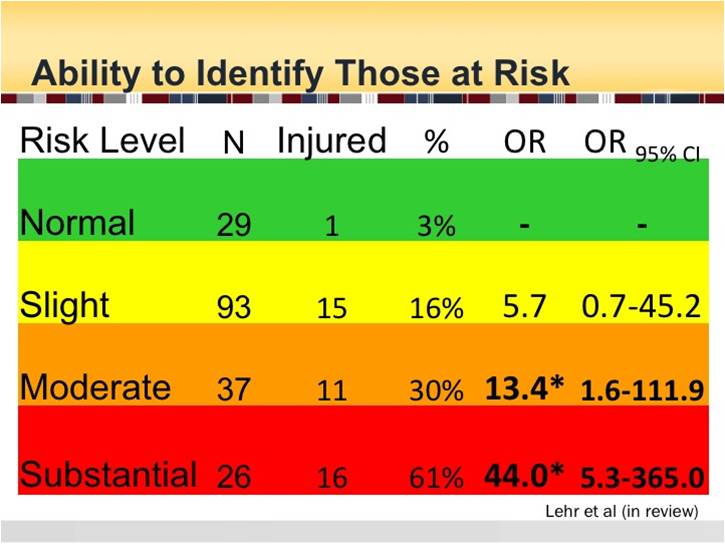
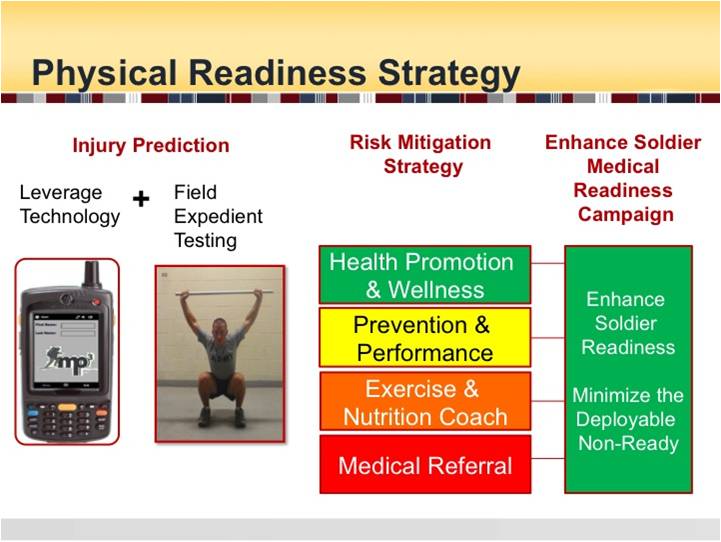
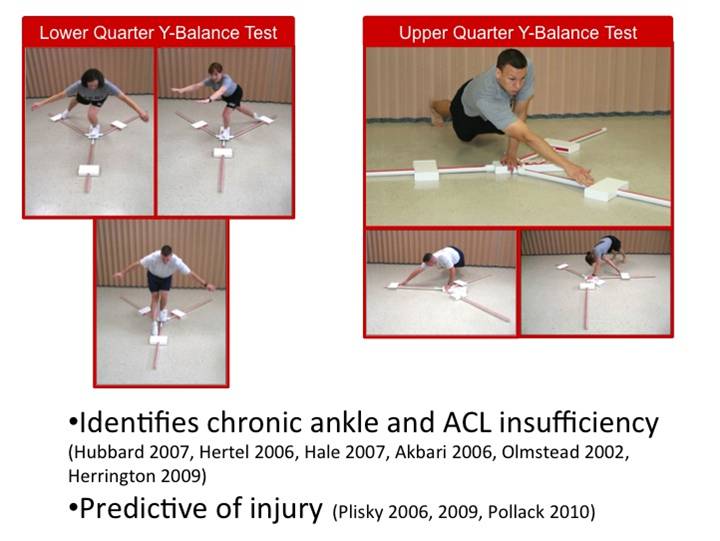
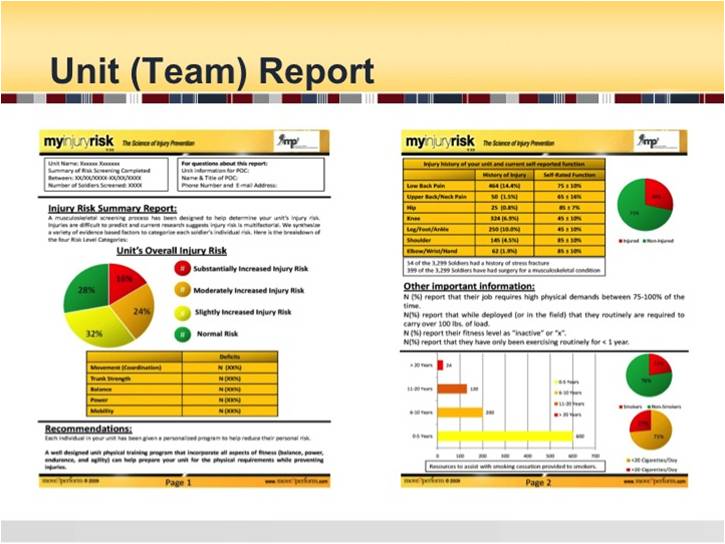
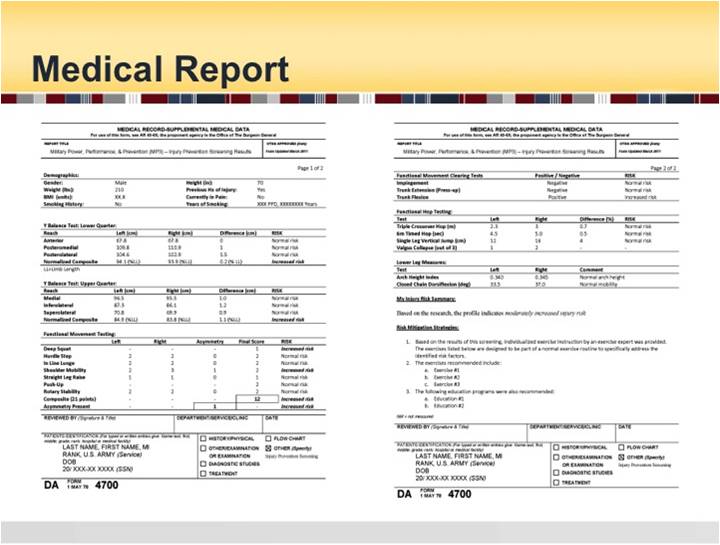
Risk factors predisposing individuals to injury are well known and many are modifiable. We are proposing a novel approach for screening and predicting injury risk in our Service Member. The screening criteria are based on field expedient, evidence based screening tools that have been successful in identifying injury risk in athletic populations (professional and collegiate athletes) but have yet to be validated for use in the military setting or across different military occupational specialties. These novel screening tools will assess fundamental movement, dynamic balance, upper extremity & trunk stability, and biopsychosocial factors in addition to common injury predictors (sex, prior history of injury, fitness level, smoking, etc) that are central to predicting and reducing injury in the military. Using these tests, researchers on our team have developed computerized algorithms for athletes that stratify injury risk level, identify need for medical referral, and provide injury mitigation strategies. These tools are currently being combined for injury assessment of athletes at the high school, university, and professional levels. A field-expedient multi-factorial approach, as we are proposing, has the potential to increase the specificity of predicting future injury by addressing multiple evidence-based risk factors that is conducive to the military setting. Based on preliminary research, we expect that these risk factors will be predictive of injury within and across different military specialties. We recently evaluated these in 1,500 Soldiers to include Rangers, Special Forces and Soldiers in a Brigade Combat Team and prospectively followed them for one year to identify injuries. We are in the process of identifying the most parsimonious set of risk factors that identify an individual Soldier’s injury risk; which will likely vary across military specialty. Once individual risk is identified, appropriate injury mitigation strategies can be implemented to reduce an individual’s injury risk and ultimately reduce time lost due to musculoskeletal injury. The potential value is in harnessing the ability to predict which of our Service Members are more likely to sustain a musculoskeletal injury before it even happens, the extent of the injury, and intervene appropriately before this occurs. Many of the potential risk factors are modifiable, meaning that appropriate intervention has the potential to go a long way in reducing the risk of injury. Performed annually, Service Members would have a documented trail of their change in risk throughout their time in the service, receive personalized reports with action plans, and commanders could receive unit reports about the risk of injury for every single member of their organization. There are many implications to include specificity of training, assessment at basic training and entrance in the military, etc.
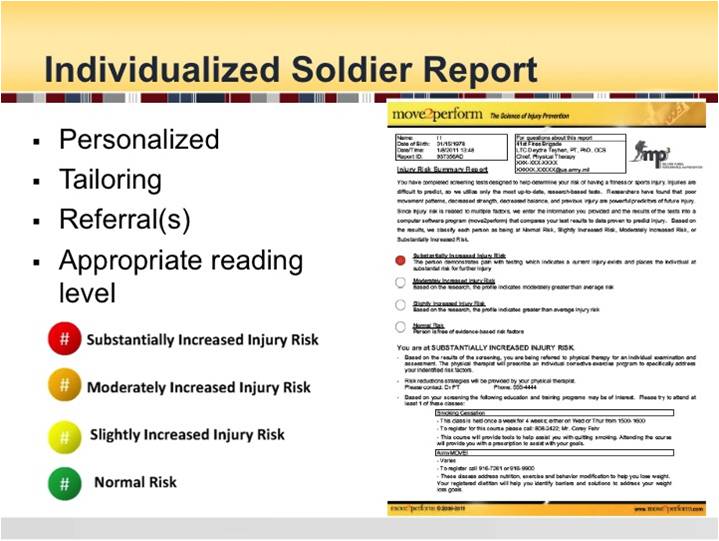
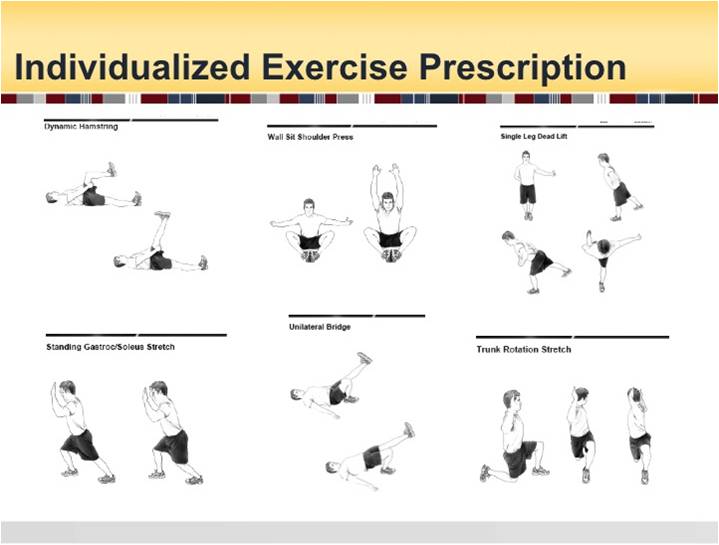
We are proposing the use of an injury risk screening protocol (we've piloted on 1500 Soldiers. Each Service Member will get a personalized report, an injury risk stratification score (1-5), and action plan which includes a direct referral to a specialist if they are in the highest risk injury group (exercise prescription, smoking cessation, mental health, etc). Their PCM will be able to track their risk status in their medical records in the same manner that they track any other common variables, such as cardiovascular risk factors, etc. We propose to pilot this in the US Army, but it can easily become a DoD tri-service integration solution across other services.
20 comments
Gib Riffle • over 13 years ago
Great study showing the validity of injury prediction - At the point of this is not just the over 500 million spent on injuries but the enhancement of quality of life as well.
Jack Barner • over 13 years ago
This is a great project
Jason Hulme • over 13 years ago
Great project glad to support with my vote.
theodore croy • over 13 years ago
This is interesting and ground breaking work on musculoskeletal injuries--ambitious and innovative as well. It is a fundamentally new way of evaluating musculoskeletal health across the DoD and parallels similar methods used for screening in other health settings---ie; dental, vision, and hearing. Most disability related expenditures are directed towards MSK diagnoses---thus, maybe we should start screening and treating those before they fully emerge.
David Feltwell • over 13 years ago
What a boon to the injury controllers!
John Stang • over 13 years ago
This is a best practice and will be standard practice in the near future. Great project.
Jeremy Fletcher • over 13 years ago
A System of Health should start with Prevention!
Bill O'Grady • over 13 years ago
Great Job. Things have really changed since I served. This can only be a positive thing for the military. It is interesting that we continue to have so many non-combat injuries. Orthopedic injuries continue to be an issue no matter where you are assigned.
John Miller • over 13 years ago
This is an excellent endeavor. It would be interesting to see if the costs associated with Army Trainee MEB's or PT test failures would decrease by implementation of effective musculoskeletal pre-screening. My guess is that alot of money could be saved with a validated tool.
Shay Rogers • over 13 years ago
Great project, as BCT therapist this is our plight - trying to sell, get buy, and actually see folks implement injury prevention and targeted training programs. If FORSCOM and our Corps can come to an understanding and this be pushed from above as well as at our finite levels, yes, this could be something!
Eric Nelson • over 13 years ago
Sounds like the right system to use. Hopefully we will be able to sell this need to the peolpe responsible for hiring the manpower needed to conduct these screenings. I fear that this will be "approved" and simply sent down to MTF and operational unit therapists. While some organizations may be adequately staffed already (BCT, MAT), many MTFs could likely find themselves having to stretch thin resources even more thin- food for thought. Speaking of food, I would like to advocate for the importance of having nutrition counseling/evaluation as an equal part.
Page Karsteter • over 13 years ago
We are finally about to break the code to inury prevention. The long term impact of this program will be tremendous. It's time to really start conserving the fighting strength!
Cathy McDowall • over 13 years ago
So much of what I see in clinic could have been prevented from becoming a chronic issue by doing exercise correctly or by doing the proper stretches/strengthening for an injury. Much of what I see existed pre-deployment and is exacerbated by being deployed injured.
David Duplessis • over 13 years ago
Focused musculoskeletal intervention is the right methodology to mitigate the services' complex preventable injury problem. A viable solution is especially important in the current DoD environment of fiscal constraint and dwindling troop strength.
Robert Williams • over 13 years ago
Outstanding tool. Opens up avenues for prevention of injury and correction of deficits that can be more focused and individualized, which will likely make it more meaningful to the Soldier.
Tim Flynn • over 13 years ago
Outstanding project! My only comment is why isn't this already a standard part of soldier health care!
Kevin Wait • over 13 years ago
This project is an excellent idea and long overdue. I work in a rehab setting on a military base and see tremendous value in decreasing the cost associated with orthopedic injuries and maintaining a soldier at full capacity. The current expense is staggering!
Brett Beuning • over 13 years ago
Treatment of soldier injuries is an extraordinary financial burden to the DoD and prevention of injuries through cost effective, individualized prevention programs such as this one will save the DoD millions in future expenses. Working in the MHS, we have seen the staggering health care costs from musculoskeletal injuries and the gigantic impacts programs such as early triage and appropriate care at the point of entry into the system. Preventing them from entering in the first place would have an even greater impact! Outstanding work!
Jack Ransone • over 13 years ago
Cool project. Outstanding tool to open the door to prevention musculoskeletal trauma and injury prediction.
Kelsey McCoskey • over 13 years ago
This looks like a great project. I'm wondering, are you also looking into the MOS and job tasks of the soldiers? While certainly personal health factors such as smoking, general fitness/wellness etc. play a big part in risk of musculoskeletal injury, the workplace risk factor (i.e. force, posture, repetition, vibration etc.) exposures would certainly have a significant effect on the liklihood of musculoskeletal injury.