
Healthcare Kiosk App
Healthcare Kiosk App Empower users to manage their healthcare leveraging BYOD
- iOS, Android, Blackberry operation systems
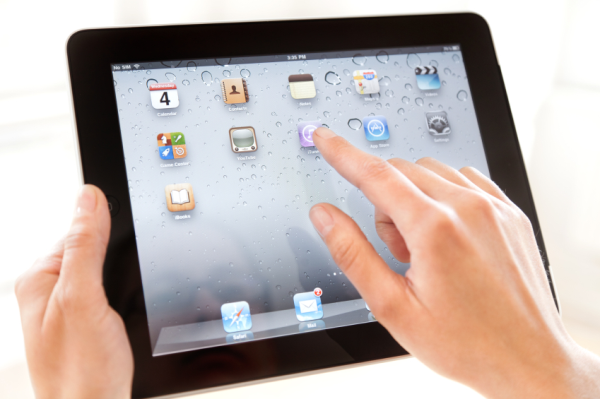
- smartphone, tablet, and web apps (for netbook and laptop form factor access)
- Use device camera to scan AD, Retired, and dependent ID cards and enter pin for verification
- Reduce Kiosk presence inside MTF’s saving hundreds of thousands of dollars annually
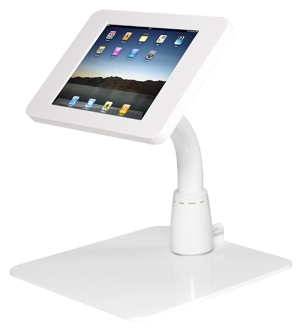
- Use OTS tablets for kiosks inside MTFs vs high-cost proprietary kiosks
- Services supported o Make, cancel, & check-in for medical appointments o Order prescription refills o Check prescription status o Directions to facility using GPS integration o Facility maps YOU ARE HERE with GPS, cellular, and wi-fi integration o MTF Contacts o Patient feedback o Direct access to patient advocate via text and phone o Access to medical record, integration with iBluebutton app o Text with provider or nurse o Education: brochures, media, chat room o Health advisories (weather, pollen, UV exposure, etc.) o Patient reminders (appointments, prescriptions, PCM changes, facility closures, etc…) o Readiness alerts (PHA, fit test, profiles, etc…) o Social networking
5 comments
Christopher Wyckoff • over 13 years ago
The IOS and android platforms cannot connect to DOD networks as they are not FIPS compliant. Windows 8 tablets would be more efficient, less expensive and can be connected to existing wireless networks.
Additionally there is no such thing as BYOD in DOD.
Perry Johns • over 13 years ago
There are actually several pilots ongoing that have android and iOS devices connected to military networks. The BYOD initiative in this situation would not require the device to connect to the DoD networks but rather would work the same way as your smartphone interats with your financial institurion. A webserver sitting outside of the network (typically in a DMZ) facilitates transactions between the smart device and its native app and the server(s) sitting behind the firewall. This can also be done using webapps (HTML5 and CSS) running on a web server.
R Young • over 13 years ago
Kiosks are just one tool of the need to become mobile. The entire core architecture needs to be evalauted. The initial push to make everything web based has been overcome by apps. In my opinion everything doesn't need to be baked into a single user interface. The commerical industry is able to respond quickly to the smart device trend becuase they have found the way to break down the large systems into chunks.
Perry Johns • over 13 years ago
Great insight RY, and I totally agree. As I understand it, the MHS is currently in the process of reengineering the core architecture as part of the iEHR implementation.
I also understand your opinion of using multiple apps instead of one "monster" app. From a user standpoint, I think its a matter of personal preference. I prefer to use one app for my interactions with a business. For instance, I use a banking app that lets me manage my accounts, make deposits, xfer funds, pay bills, review my investment portfolio, print proof-of-insurance cards and so on...I would not want to open multiple apps to facilitate the various interfaces with my bank. My thought process on interactions with the MHS is very similar to that of the banking app.
However, from an implementation and maintenance stand-point creating multiple apps could be advantageous and allow the MHS to implement mobile app utilities incrementally, ultimately this methodology could get apps to the customer faster. If this idea were chosen I don't think it is realistic to assume that every capability that I've outlined in the idea would be an instant reality but rather it would be built incrementally after some market research to identify the most desired app tools.
Greg Gorman • over 13 years ago
So many kiosk initiatives, and yet most of them sit unused or unplugged. This is not a problem with the proposal, but a problem with the organizational structure. The MHS is so behind corporate America with its lack of a CIO and a coordinated IT policy with authority and regulatory teeth. Until such a MHS wide IT czar is established, I fear that all of these great IT projects will go nowhere.